The Poster Was Designed to Feel “Cheap” on Purpose
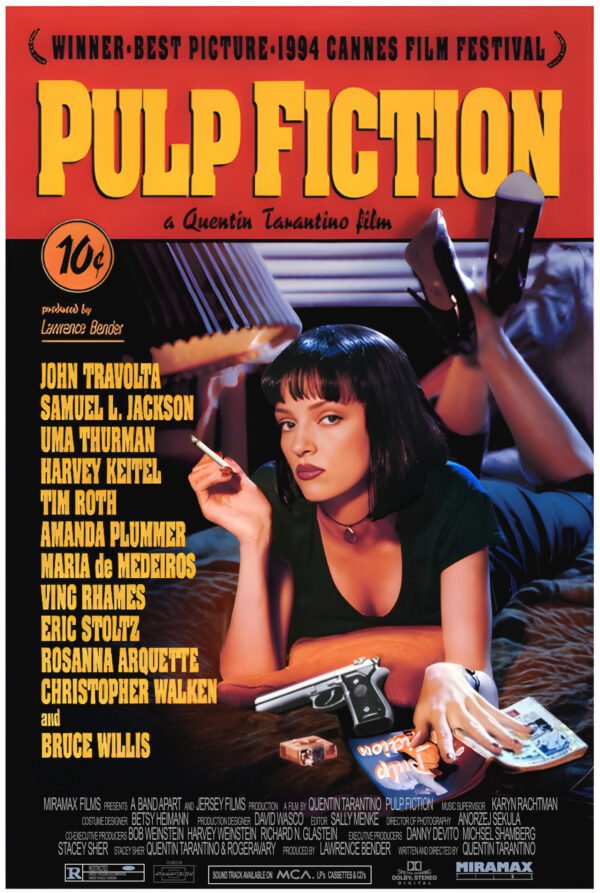
The famous cover featuring Mia Wallace lying on the bed with a cigarette and paperback was styled to look like a worn pulp magazine from the 1940s–50s. Even the slightly aged look and bold typography were intentional, created to match the film’s title and its inspiration from old crime novels sold at newsstands.
The 10¢ Detail Became an Iconic Easter Egg
On the poster, the pulp magazine Mia is holding has a visible “10¢” price tag. This wasn’t random — it was added to make the image feel like a vintage publication and to reinforce the film’s theme of reviving old-school storytelling. Many fans don’t notice this small detail until they see the poster up close.
The Poster Helped Turn an Indie Film into a Cultural Movement
Before release, this striking image was used heavily in promotion and quickly became recognisable worldwide. Its bold, minimalist design stood out from typical 90s movie posters, helping Pulp Fiction build a cult following even before many people had seen the film. Today, it’s considered one of the most recognisable movie posters ever created.